

Which System Is the Most Efficient for Refrigerated Mobile Containers?
A Comparison of Energy Consumption and Carbon Emissions Across Five Different System Configurations
Soğutma Verimlilik için Etkin Kontrol Çalışması:
Gıda ve İlaç Sektörlerinde Maliyet Optimizasyonu ve Sürdürülebilir Çözümler
Mobile refrigerated containers used in cold chain transportation play a critical role in ensuring the safety of pharmaceuticals, food products, and biological materials. However, these systems must also be evaluated and optimized in terms of energy efficiency and carbon footprint.
The growing demand for mobile cold chain logistics, particularly for temperature-sensitive products requiring deep-freeze conditions, makes innovative and sustainable refrigeration solutions essential. Although conventional diesel-powered units are robust, they increase greenhouse gas emissions and operational costs. In line with rising energy costs and sustainability goals, the power architecture used in refrigeration systems has become a much more strategic choice. When selecting the right system, not only the initial investment cost but also operational energy efficiency and carbon emissions should be taken into account.
In this study, we present a comparison of five different refrigeration system configurations in terms of energy consumption and carbon emissions for a 10 m³ mobile container maintaining temperatures between -20°C and -30°C. Which system is more efficient? Which configuration is more environmentally friendly?
System Configurations Evaluated
- Diesel Engine-Driven System
- Battery-Supported Inverter-Driven AC Motor System
- Battery-Supported DC Motor System (Without Inverter)
- Battery- and Solar-Assisted Inverter-Driven AC Motor System
- Battery- and Solar-Assisted DC Motor System (Without Inverter)
These five system configurations were compared in terms of energy conversion efficiency, battery performance, motor type, and solar energy integration. The calculations were performed based on summer operating conditions, assuming an ambient temperature of 35°C during the daytime and 20°C at night.
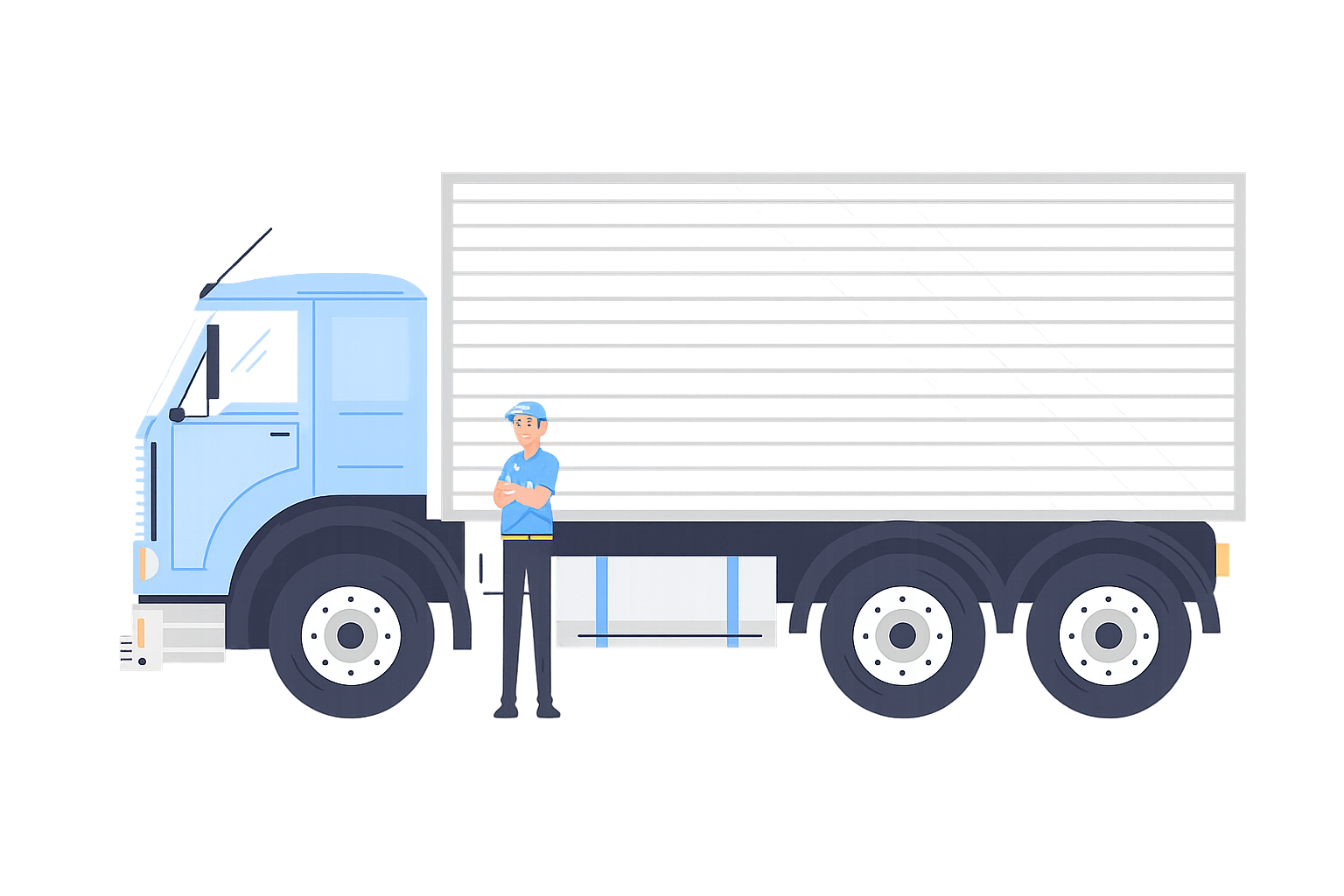
A fixed 20 kWh lithium-ion (Li-ion) battery capacity was assumed for all electric and hybrid system scenarios. The combined average charge/discharge efficiency of the Li-ion battery was assumed to be 90% (Battery University, n.d.). For the solar-assisted configurations, PWM (Pulse Width Modulation) charge controllers were considered instead of MPPT controllers. This assumption is based on the limited roof area of the mobile container (3.5 m × 2.1 m), which restricts the number of photovoltaic panels that can be installed. Consequently, even the maximum achievable PV array voltage is expected to remain below the minimum operating voltage threshold required for MPPT controllers. In addition, the analysis accounts for constraints specific to mobile applications, including partial shading and the dynamic variation of solar incidence angles during vehicle operation.
Scenario 1: Diesel Engine-Driven Refrigeration
In this configuration, a diesel engine converts the chemical energy stored in fuel into mechanical power to drive the refrigeration compressor. The compressor is directly driven by the diesel engine, enabling the refrigeration system to operate independently of the electrical grid. No battery energy storage is used in this configuration.
For the mobile container application, a diesel engine thermal efficiency of 30% was assumed (Lira, n.d.).
Scenario 2: Inverter-Driven AC Motor with Battery-Supported Refrigeration
In the AC motor configurations (Scenarios 2 and 4), a Variable Frequency Drive (VFD) is used to control the compressor speed. The refrigeration compressor is driven by an AC motor controlled by the inverter, with the electrical grid serving as the primary power source. A 20 kWh Li-ion battery provides backup power when required.
Based on experimental measurements, inverter losses were found to range between 15% and 20% under practical operating conditions. Therefore, the inverter efficiency was assumed to be 82.5%, while the AC motor efficiency was assumed to be 92%. The resulting combined efficiency of the inverter-driven AC motor system was calculated as 75.9% (Danfoss, n.d.; Rigid HVAC, n.d.).
Scenario 3: Battery-Supported DC Motor Refrigeration (Without Inverter)
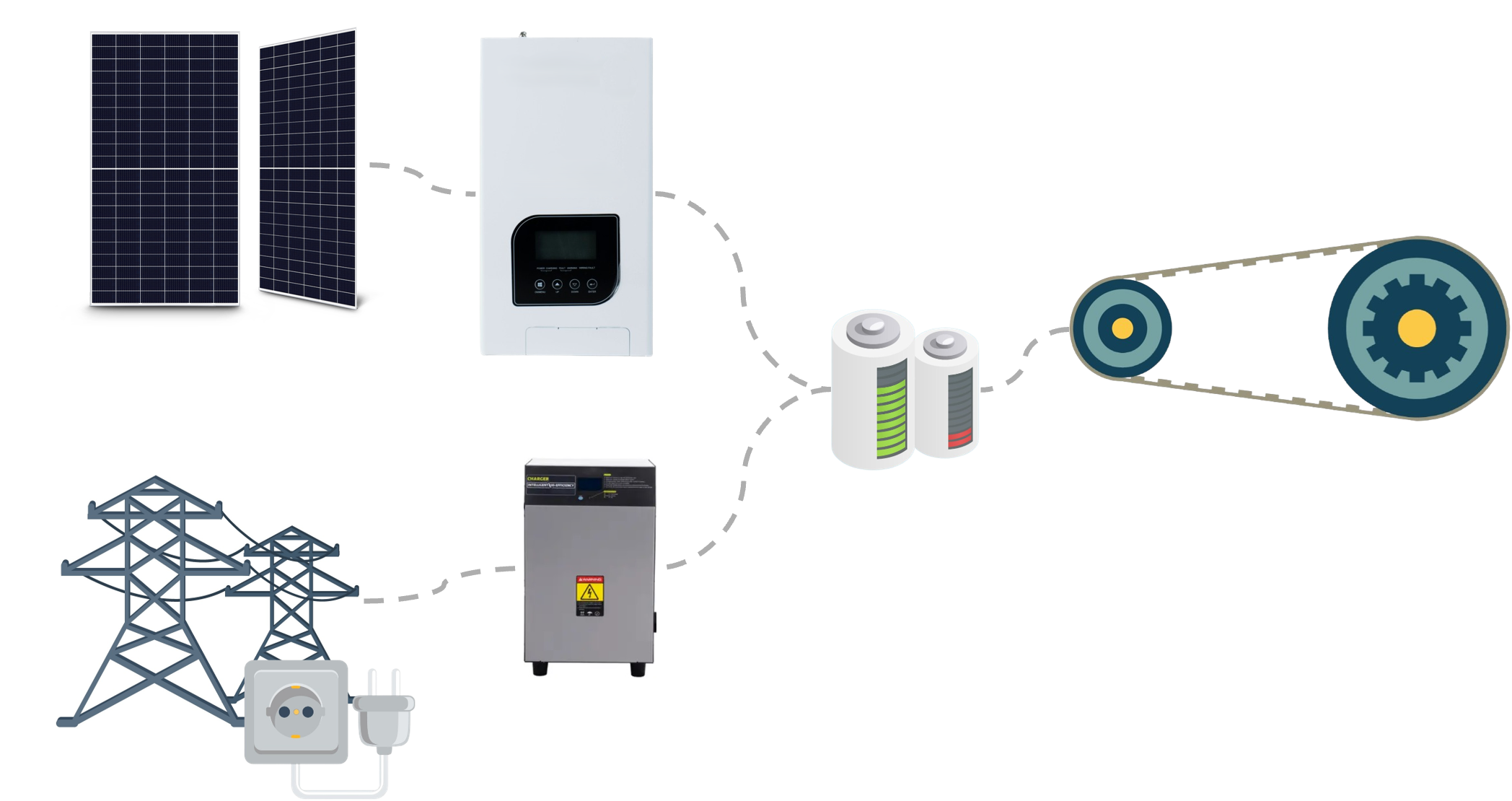
In the DC motor configurations (Scenarios 3 and 5), a brushless DC (BLDC) motor is employed due to its inherently high efficiency. The refrigeration compressor is driven directly by the BLDC motor. The system is powered either by the electrical grid through an AC–DC rectifier or by a 20 kWh Li-ion battery, which serves as an alternative power source. Unlike the AC motor configuration, this system does not require an inverter. Eliminating the inverter reduces power conversion losses, particularly when operating from DC sources such as batteries or photovoltaic (PV) systems. However, when the system is supplied from an AC grid, an AC–DC rectifier is still required, introducing a certain level of conversion loss.
The efficiency of the BLDC motor was assumed to be 95% (Reddit, n.d.; Rigid HVAC, n.d.).
Scenario 4: Inverter-Driven AC Motor with Battery and Solar-Assisted Refrigeration
This hybrid configuration combines the core features of Scenario 2—an inverter-driven AC motor and a 20 kWh Li-ion battery—with on-site solar power generation. Photovoltaic (PV) panels are installed on the roof of the mobile container to reduce dependence on the electrical grid by either charging the battery or supplying power directly to the refrigeration system whenever sufficient solar energy is available.
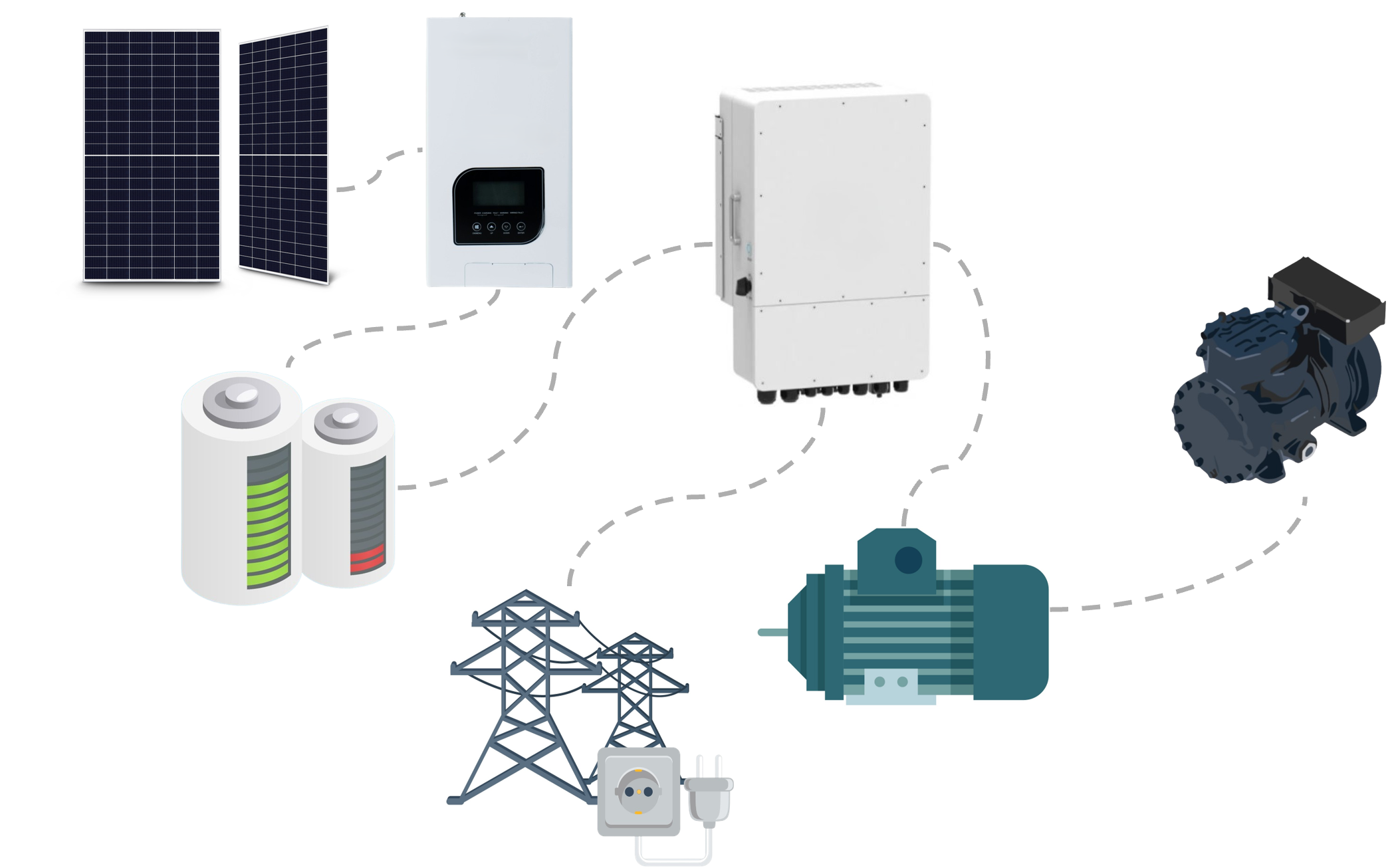
Scenario 5: DC Motor with Battery and Solar-Assisted Refrigeration
This hybrid configuration combines the core features of Scenario 3—a brushless DC (BLDC) motor and a 20 kWh Li-ion battery—with photovoltaic (PV) power generation. The PV panels can supply power directly to the DC motor or charge the battery, thereby minimizing the number of energy conversion stages and maximizing overall system efficiency. This architecture is particularly advantageous for mobile refrigeration applications, where reducing conversion losses contributes to lower energy consumption and improved system performance.
Results
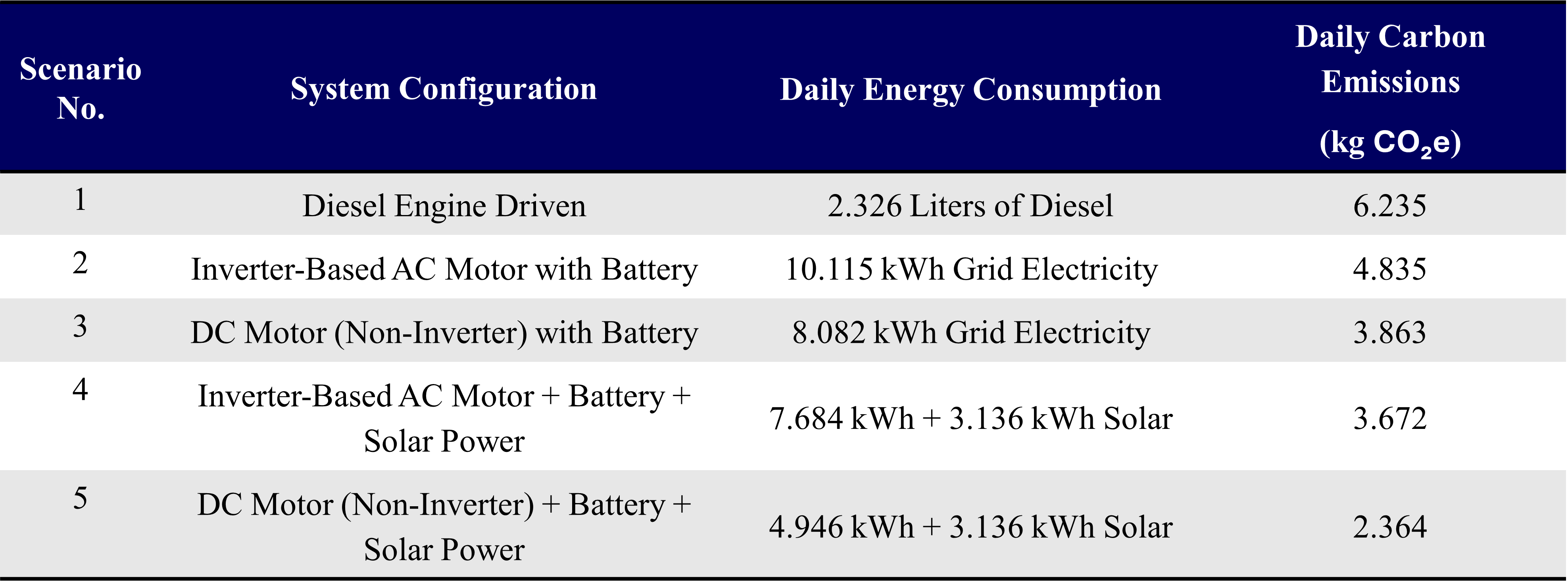
Based on the calculations and assumptions presented above, the daily energy consumption and carbon footprint of each system configuration are summarized in the table below.
High Environmental Burden of Diesel-Powered Systems
Scenario 1 (diesel engine-driven refrigeration) exhibits the highest carbon emissions among all evaluated configurations. In addition to CO₂ emissions, diesel engines produce significant quantities of local air pollutants, including nitrogen oxides (NOₓ), particulate matter (PM), and sulfur oxides (SOₓ), resulting in broader environmental and public health impacts. These findings indicate that diesel-powered refrigeration systems are the least favorable option from a sustainability perspective.
Efficiency Advantage of Electrically Powered Systems
The electrically powered configurations (Scenarios 2 and 3) exhibit significantly lower carbon emissions than the diesel-powered system. In particular, the DC motor configuration (Scenario 3) achieves higher overall efficiency than the inverter-driven AC motor configuration (Scenario 2) by eliminating inverter-related conversion losses through direct DC operation. Although inverter-driven AC motors introduce additional conversion losses, their ability to operate at variable speeds can substantially improve overall system performance by matching compressor capacity to the cooling demand. This capability enhances energy efficiency and contributes to reduced electricity consumption under practical operating conditions.
The Role of Solar Energy in Reducing Carbon Footprint
The integration of solar energy (Scenarios 4 and 5) significantly reduces carbon emissions by decreasing the amount of electricity drawn from the grid. The battery- and solar-assisted DC motor configuration (Scenario 5) achieved the lowest carbon emissions among all evaluated systems. These findings highlight the critical role of renewable energy integration in improving the environmental performance and sustainability of mobile refrigeration systems.
Challenges of Solar Energy Integration in Mobile Applications
The limited roof area of the mobile container restricts the number of photovoltaic (PV) panels that can be installed. Furthermore, because the achievable PV array voltage remains below the minimum operating threshold required for MPPT controllers, PWM (Pulse Width Modulation) charge controllers were assumed. Compared with MPPT technology, PWM controllers can reduce solar energy harvesting efficiency by approximately 5% to 30% (DIY Solar Forum, n.d.; Morningstar Corp., n.d.; Solar 4 RVs, n.d.). In addition, the mobile nature of the container introduces practical challenges such as continuously changing solar incidence angles, partial shading, and vehicle orientation, all of which further reduce PV system performance under real-world operating conditions. Consequently, a substantial amount of supplemental energy must still be supplied by either the electrical grid or the battery system.
Importance of Battery Energy Storage Systems
The 20 kWh Li-ion battery serves as a critical energy buffer in all electric and hybrid system configurations. For the purpose of this study, the battery's combined charge/discharge efficiency was conservatively assumed to be 90%. In practice, LiFePO₄ batteries can achieve round-trip efficiencies of 95–98% at a 0.5 C charge/discharge rate (Battery University, n.d.), demonstrating the high efficiency of modern battery energy storage technologies. The battery system provides a reliable source of backup power, ensuring continuous refrigeration during periods of insufficient solar generation or when grid power is unavailable. As a result, it significantly enhances the operational reliability, energy flexibility, and resilience of the mobile refrigeration system.
Most Efficient System Configuration
Considering both carbon footprint and overall energy efficiency, Scenario 5 (Battery- and Solar-Assisted DC Motor Refrigeration Without an Inverter) emerges as the most favorable configuration among those evaluated. The combination of a direct-drive BLDC motor, the elimination of inverter-related conversion losses, and the integration of photovoltaic (PV) power minimizes both energy consumption and environmental impact. These results suggest that inverter-free DC motor architectures, when combined with battery energy storage and renewable energy generation, offer a highly efficient and sustainable solution for mobile refrigerated container applications.
Recommendations
Focus on Environmental Sustainability
To reduce carbon emissions and local air pollution, the transition from diesel-powered refrigeration systems to electric and hybrid alternatives should be prioritized. Electrification, particularly when combined with renewable energy sources, offers substantial environmental benefits while supporting long-term sustainability goals.
Optimization of the Solar Energy System
To maximize the potential of solar energy in mobile refrigerated containers, photovoltaic (PV) panels with higher maximum power voltage (Vmp) should be selected whenever feasible. In addition, mobility-oriented solutions such as flexible or foldable PV panels may provide greater usable surface area and improve solar energy harvesting under practical operating conditions.
Battery Management
An intelligent Battery Management System (BMS) should be integrated to optimize battery performance and extend service life. By continuously monitoring the battery's state of charge, state of health, and charge/discharge rates, a BMS can maximize system reliability and operational efficiency. Furthermore, maintaining charge and discharge rates at 1 C or lower can improve energy efficiency while significantly extending battery lifespan (NenPower, 2025).
Reduction of Cooling Load
Maintaining and continuously improving the thermal insulation performance of the container is essential for reducing the refrigeration load under all operating scenarios. In mobile applications, additional heat gain caused by solar radiation on the container exterior should also be considered. Measures such as high-reflectivity exterior coatings, solar-reflective surfaces, or other passive cooling strategies can further reduce thermal loads, thereby lowering energy consumption and improving overall system efficiency.
Optimization of Refrigeration Operation: Night Cooling and Eutectic Plates
Several strategies can be implemented to optimize the energy consumption of the refrigeration system and improve the operational efficiency of mobile refrigerated containers.
Night Cooling Strategy: Operating the refrigeration system intensively during nighttime, when ambient temperatures are lower, can significantly improve energy efficiency. In this approach, the container is precooled to approximately −30°C during the night, reducing the refrigeration demand during daytime operation. Because nighttime ambient temperatures are considerably lower than daytime temperatures, the refrigeration cycle operates under more favorable conditions, resulting in improved system efficiency. When grid electricity is available, this strategy also enables electricity consumption to be shifted to off-peak hours, potentially reducing operating costs while alleviating peak demand on the electrical grid.
Integration of Eutectic Plates (Phase Change Materials - PCM): Eutectic plates, or Phase Change Materials (PCMs), are capable of storing and releasing large amounts of thermal energy through a phase transition at a predetermined temperature (Advanced Cooling Technologies, n.d.; Olivo Logistics, n.d.; PureTemp, n.d.). This characteristic makes them an effective thermal battery for mobile refrigeration applications.
During nighttime operation, the active refrigeration system freezes the PCM to approximately −30°C. During this charging process, the PCM absorbs thermal energy as latent heat while solidifying. During the day, as ambient temperatures increase and the container gains heat, the PCM gradually melts, absorbing the incoming heat and maintaining the internal container temperature within the required range. As a result, the daytime operation of the active refrigeration system can be substantially reduced or, in some cases, eliminated (Inpressco, 2016; Olivo Logistics, n.d.).
It is important to note that the use of eutectic plates does not reduce the total daily heat gain of the container. Instead, it redistributes how that thermal load is managed. A significant portion of the daytime heat gain is absorbed by the PCM rather than being removed immediately by the refrigeration compressor. Consequently, the active refrigeration system operates primarily during nighttime to remove the overnight heat gain and to recharge (freeze) the PCM by extracting an amount of heat approximately equivalent to the anticipated daytime thermal load.
Therefore, while the total daily energy consumption of the refrigeration compressor remains largely unchanged, the timing of energy consumption and the operating profile of the refrigeration system are optimized. Shifting the cooling load to nighttime reduces daytime battery discharge, improves the utilization of solar-generated electricity, decreases peak electrical demand, and enhances the overall operational efficiency of hybrid refrigeration systems.
References
Advanced Cooling Technologies. (n.d.). PCM heat sinks.
Battery University. (n.d.). BU-808c: Coulombic and energy efficiency with the battery.
Danfoss. (n.d.). Inverter compressor technology offers new opportunities for air conditioning systems.
DIY Solar Forum. (n.d.). MPPT input voltage vs. efficiency.
Ember. (2025). Türkiye Electricity Review 2025.
Food and Agriculture Organization of the United Nations. (n.d.). Heat gain calculation refrigerated container.
Inpressco. (2016, March). Eutectic plates are widely used in refrigerated vehicles.
Lira, C. T. (n.d.). The Diesel Engine. Michigan State University.
Morningstar Corp. (n.d.). What are the different types of solar charge controllers?
NenPower (2025). How can charge and discharge rates affect the performance of energy storage systems
Olivo Logistics. (n.d.). Understanding and maximizing the use of eutectic plates in the supply chain.
PureTemp. (n.d.). Phase change materials (PCM).
Rigid HVAC. (n.d.). Discover differences AC compressor DC compressor smallest options compared.
Rigid HVAC. (n.d.). Efficiency inverter compressor refrigerator.
Rigid HVAC. (n.d.). Inverter technology refrigerators advantages.
Solar 4 RVs. (n.d.). Choosing the right solar charge controller regulator.
T.C. Enerji ve Tabii Kaynaklar Bakanlığı. (2024). Türkiye Elektrik Üretimi ve Elektrik Tüketim Noktası Emisyon Faktörleri.